Again with Harris. Recently (Feb 19) the NYT Book Review issued a ridiculous review of Daniel Dennett's new book. I refer you to This review of the review.
One of the things which came up in a conversation with a friend about this was the stark contrast between the reception of Harriss' book (which won the 2005 PEN award for nonfiction) and the attempted burial of Dennett's book. Now, as a once and possibly future bookseller I can tell you that the NYT Book Review holds a great amount of sway not just with the reading public, but with book orderers as well. A bad review by them can serve to have the print run of a book cut in half, can affect the possibilities of paperback versions coming out, and can decrease dramatically the amount of copies ordered by bookstores. A controversial book with such a review will almost certainly preclude its showing up on the shelves of some major chains (both book store chains and Target/WalMart sorts).
That the NYT chose to forgo having its religion or science editor review the book and bring in instead a political writer from a neo-con publication speaks volumes about the true intentions. Rather than being weighed on its real merits, Dennett's sugestion to find out why people continue to believe things which have been repeatedly proven untrue (which could have all kinds of practical applications, from helping abuse victims to break the cycle to having religions come under stiffer scrutiny) is being dismissed by the neo con reviewer. To whose benefit? The answer is obvious: to the benefit of the ruling classes.
Do not look, they say, at the Facts. It has ever been thus. Rely instead on a better place after death. This is very handy in diffusing any attempts at improvement for this life- the one which we have proof exists.
Anyhoo. I am dangerously close to a page-by-page review of Harriss' book. So close that I have given my copy away for now (I cannot afford another one- the benefit of poverty).
In lieu of this, I am continuing for the moment with the Laura Ingalls Wilder and Trotsky's Problems of Everyday Life.
On Problems:
This is an interesting series of articles, editorials really, written by Trotsky in the early 1920's, during the initial years of building a socialist society. His eye for the details of everyday life was quite sharp. Over the next couple of days I will tackle a few of the major areas- including education, domestic living (including the role of women), and general behaviour.
Friday, March 31, 2006


Friday, March 17, 2006
West From Home- L Ingalls Wilder
In 1915, Laura Ingalls Wilder took a series of trains west from Missouri to San Francisco, where her daughter, Rose, was living with her husband. This was the year of the Panama-Pacific International Exposition, about which many of Laura's letters home to her husband revolve.
It seems things were still difficult, financially speaking, and Laura's visit was also a sort of exploratory thing to see if she and Almonzo should move to the Bay Area (not then known as such). She visited San Francisco, San Jose and even Mill Valley in search of information on the cost of farming. Even then, the higher prices commanded for chickens and eggs (their main business in MO) is noted, as is also the difficulty in finding out the price of grain to feed the birds.
Before she sets out, her daughter writes to Laura: "...It will be foggy and dusty and windy and gray and you will not like San Francisco while you are here, and then when you go away you will always want to come back. Tis ever thus." Tis, indeed. I grew up in this city, and can vouch for the above statement.
It was interesting to read about places I recognized, even almost 100 years later. It was also interesting to read about the high rents- even then- in the foggy place. Also of note is the fact that, in order to persuade her to come, Rose offered to pay her mom for the time she'd be missing at the farm so there wouldn't be a burden imposed.
It was also during WW1 when Laura visited- she writes of this, of the armaments at the head of the Golden Gate, and of ships in the Bay and the possibilities of which ones will be sunk by German boats once they leave the area. She sees a number of films, including footage of the German capture of Przemys.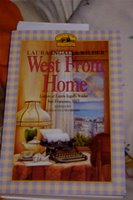
Truly it is an interesting time- a turning point in history. This book offers a glimpse into what the 'person on the street' saw. Laura's voice is fresh and her observations are sharp. She is one of the least judgemental writers I have seen- plain-spoken but not without point.
On her way out, she meets many people on the trains. One couple, a man who used to be a Bryan Democrat, but who is turning Socialist, and his wife who votes. (Women in Ogden had the vote by 1915. Utah may not be totaly lost, eh?) Bryan, most 'famous' for his part in the Scopes Monkey Trial, was before this, a populist candidate for President (there is, in North Miami Beach, an elementary school named for him which I attended for two years in first and fifth grades). Apparently, the man Laura met had woken up to the truth of Capitalism's failures and was switching over. It's impossible to say for certain, though, as he is afforded only the one sentence.
Utah, surprisingly enough, given its present political makeup, has a long and somewhat bloody labour history. More on this in part two....
It seems things were still difficult, financially speaking, and Laura's visit was also a sort of exploratory thing to see if she and Almonzo should move to the Bay Area (not then known as such). She visited San Francisco, San Jose and even Mill Valley in search of information on the cost of farming. Even then, the higher prices commanded for chickens and eggs (their main business in MO) is noted, as is also the difficulty in finding out the price of grain to feed the birds.
Before she sets out, her daughter writes to Laura: "...It will be foggy and dusty and windy and gray and you will not like San Francisco while you are here, and then when you go away you will always want to come back. Tis ever thus." Tis, indeed. I grew up in this city, and can vouch for the above statement.
It was interesting to read about places I recognized, even almost 100 years later. It was also interesting to read about the high rents- even then- in the foggy place. Also of note is the fact that, in order to persuade her to come, Rose offered to pay her mom for the time she'd be missing at the farm so there wouldn't be a burden imposed.
It was also during WW1 when Laura visited- she writes of this, of the armaments at the head of the Golden Gate, and of ships in the Bay and the possibilities of which ones will be sunk by German boats once they leave the area. She sees a number of films, including footage of the German capture of Przemys.

Truly it is an interesting time- a turning point in history. This book offers a glimpse into what the 'person on the street' saw. Laura's voice is fresh and her observations are sharp. She is one of the least judgemental writers I have seen- plain-spoken but not without point.
On her way out, she meets many people on the trains. One couple, a man who used to be a Bryan Democrat, but who is turning Socialist, and his wife who votes. (Women in Ogden had the vote by 1915. Utah may not be totaly lost, eh?) Bryan, most 'famous' for his part in the Scopes Monkey Trial, was before this, a populist candidate for President (there is, in North Miami Beach, an elementary school named for him which I attended for two years in first and fifth grades). Apparently, the man Laura met had woken up to the truth of Capitalism's failures and was switching over. It's impossible to say for certain, though, as he is afforded only the one sentence.
Utah, surprisingly enough, given its present political makeup, has a long and somewhat bloody labour history. More on this in part two....
Monday, March 13, 2006
Redirecting you to this:
I am taken up with reading and editing at present. I am also taken up with being extremely angry. Here is an example of why- I give you a very usefull bit of reading:
Annotated Life
Annotated Life
Friday, March 10, 2006
Life- past and present. Very brief
The quandry arising from the common universal ignorance of what to do with this soul, once its existence had been accepted, after the death of the body, and not religious desire for consolation, led in a general way to the tedious notion of personal immortality.- Engles- Ludwig Fueuerbach and the End of Classical German Philosphy (pt 2-Materialism)
It is tedious. It's also dangerous and distracting. Not only does it take the focus off of what is happening *now*, it opens the door to promises which never need to be delivered. Why work for a betterment of here and now if the next world will be perfect without any effort- except that which is demanded by priests? Good excuse to maintain the status quo.
It is tedious. It's also dangerous and distracting. Not only does it take the focus off of what is happening *now*, it opens the door to promises which never need to be delivered. Why work for a betterment of here and now if the next world will be perfect without any effort- except that which is demanded by priests? Good excuse to maintain the status quo.
Friday, March 03, 2006
What I wish I'd known before- meandering thoughts about mom
Growing up as I did in a lackadaisicaly Left household, I was exposed to a number of ideas which I wish had been presented in a form other than the glancing conversational. By the time I was three, I was familiar with boycotting, overthrowing and Nixon-as-liar. I knew a few names (Debbs, Teamster, Mao (oy!), Lenin and Marx.) My mother was a reformist, member of the SDS, and seller of the Little Red Book (did she ever read it? I don't know for sure) to raise funds (irony o'irony).
By the time I was 6, I knew first hand that I did not like the FBI. My uncle, you see, had been involved with a group which had done a bombing (late 60's) of a power supply plant or something. No one was injured, but the Wisconsin police were cracking down and my uncle, being still underage, was - though not actually present at the bombing, nor actually involved in the action- fingered by the group who figured that he'd get off easy and that their sentences would be reduced for naming the name. Nice.
Well, what actually happened was that they decided to prosecute him as an adult, so he went on the run. For years we didn't know where he was. The FBI followed us from state to state, followed my mother to work, and likely have a couple of good photos of me at montessori school. I vaguely remember biting an officer who came to the house.
All of this, combined with our cutting our Mexican Vacation short when Allende fell, scared my mom out of being very vocal about politics other than the boycotting (Nestle in particular, and Libby's). She will talk about who she hates in politics, but it has devolved into a weird belief that the Democrats offer any alternative, and that there is an "evil" in the White House. I don't think living in New Age Marin helped any of us, but she has taken a lot of the claptrap to heart. I still love her.
What this all adds up to is this for me: Years of intellectual wandering. I knew what "seemed right", and I knew how to spot a blatant lie. It's a start, to be sure. But what I wish I'd had was a grounding in Marx and Trotsky. I wish that boxes and boxes of books had not been left behind when we left Wisconsin. Even though I know a lot of the SDS (and their tactics in particular) is a load of hooey, historically speaking, I want those boxes back.
There are days when I think about writing a Trotsky For Tots book- even if it were never published, at least my own child would have a head start. Lenin for the Little ones. The problem I see is that these concepts deserve to not be juvenalised- indeed, they need to not be. It's a quandry. How do you communicate these things to a kid? I know there are Bible Stories for Kids, but I tend to classify them with the fairy tale genre.
There's a series of books which Boy likes- about seasons, robots, and science (I read them to him, and he likes the pictures), so I know that even a two-year-old want to know about the world around him. It's not hopeless, it's just tricky.

By the time I was 6, I knew first hand that I did not like the FBI. My uncle, you see, had been involved with a group which had done a bombing (late 60's) of a power supply plant or something. No one was injured, but the Wisconsin police were cracking down and my uncle, being still underage, was - though not actually present at the bombing, nor actually involved in the action- fingered by the group who figured that he'd get off easy and that their sentences would be reduced for naming the name. Nice.
Well, what actually happened was that they decided to prosecute him as an adult, so he went on the run. For years we didn't know where he was. The FBI followed us from state to state, followed my mother to work, and likely have a couple of good photos of me at montessori school. I vaguely remember biting an officer who came to the house.
All of this, combined with our cutting our Mexican Vacation short when Allende fell, scared my mom out of being very vocal about politics other than the boycotting (Nestle in particular, and Libby's). She will talk about who she hates in politics, but it has devolved into a weird belief that the Democrats offer any alternative, and that there is an "evil" in the White House. I don't think living in New Age Marin helped any of us, but she has taken a lot of the claptrap to heart. I still love her.
What this all adds up to is this for me: Years of intellectual wandering. I knew what "seemed right", and I knew how to spot a blatant lie. It's a start, to be sure. But what I wish I'd had was a grounding in Marx and Trotsky. I wish that boxes and boxes of books had not been left behind when we left Wisconsin. Even though I know a lot of the SDS (and their tactics in particular) is a load of hooey, historically speaking, I want those boxes back.
There are days when I think about writing a Trotsky For Tots book- even if it were never published, at least my own child would have a head start. Lenin for the Little ones. The problem I see is that these concepts deserve to not be juvenalised- indeed, they need to not be. It's a quandry. How do you communicate these things to a kid? I know there are Bible Stories for Kids, but I tend to classify them with the fairy tale genre.
There's a series of books which Boy likes- about seasons, robots, and science (I read them to him, and he likes the pictures), so I know that even a two-year-old want to know about the world around him. It's not hopeless, it's just tricky.

Sunday, February 26, 2006
Prerequired reading done as a post script
I'm in the middle of about five essays and reviews in relation to the End Of Faith. To start off, I am reading Engles' Ludwig Feuerbach and the end of Classical German Philosophy. I am too sickly right now to delve deeply, but my favourite phrases so far:
"...the tedious notion of personal immortality." (Isn't it, though?)
"Matter is not a product of mind, but mind itself is merely the highest product of matter."
"In the second place, we simply cannot get away from the fact that everything that sets men acting must find its way through their brains..."
It looks like Mosley will have to wait. Ah well.
It's also one of those times when I wish I'd read all this before now, as I think a lot of things would make a lot more sense.
"...the tedious notion of personal immortality." (Isn't it, though?)
"Matter is not a product of mind, but mind itself is merely the highest product of matter."
"In the second place, we simply cannot get away from the fact that everything that sets men acting must find its way through their brains..."
It looks like Mosley will have to wait. Ah well.
It's also one of those times when I wish I'd read all this before now, as I think a lot of things would make a lot more sense.
Thursday, February 23, 2006
Coxey's Armies and memories of DC
I did a little research (very surface) on Coxey-in doing so, I of course stumbled accross an interesting report about Internal Interventions by the US military, which included a mention of "battling" Coxey's Armies.
http://www.culture-of-peace.info/intervention/chapter3-6.html - sorry I don't have the clean linking thing down yet.
Coxey himself was Jacob S Coxey, a sandstone quarry operator from Ohio. Here is his speach (which he intended to read on May 1, 1894, but which he was unable to deliver until May 1, 1944, due to being imprissioned for "trespassing" on the White House [People's House, right?]) lawn in 1894. It was entered into the Congressional Record by sympathetic members.
--------------------
The Constitution of the United States guarantees to all citizens the right to peaceably assemble and petition for redress of grievances, and furthermore declares that the right of free speech shall not be abridged.
We stand here to-day to test these guaranties of our Constitution. We choose this place of assemblage because it is the property of the people, and if it be true that the right of the people to peacefully assemble upon their own premises and utter their petitions has been abridged by the passage of laws in direct violation of the Constitution, we are here to draw the eyes of the entire nation to this shameful fact. Here rather than at any other spot upon the continent it is fitting that we should come to mourn over our dead liberties and by our protest arouse the imperiled nation to such action as shall rescue the Constitution and resurrect our liberties.
Upon these steps where we stand has been spread a carpet for the royal feet of a foreign princess, the cost of whose lavish entertainment was taken from the public Treasury without the consent or the approval of the people. Up these steps the lobbyists of trusts and corporations have passed unchallenged on their way to committee rooms, access to which we, the representatives of the toiling wealth-producers, have been denied. We stand here to-day in behalf of millions of toilers whose petitions have been buried in committee rooms, whose prayers have been unresponded to, and whose opportunities for honest, remunerative, productive labor have been taken from them by unjust legislation, which protects idlers, speculators, and gamblers: we come to remind the Congress here assembled of the declaration of a United States Senator, “that for a quarter of a century the rich have been growing richer, the poor poorer, and that by the close of the present century the middle class will have disappeared as the struggle for existence becomes fierce and relentless.”
We stand here to remind Congress of its promise of returning prosperity should the Sherman act be repealed. We stand here to declare by our march of over 400 miles through difficulties and distress, a march unstained by even the slightest act which would bring the blush of shame to any, that we are law-abiding citizens, and as men our actions speak louder than words We are here to petition for legislation which will furnish employment for every man able and willing to work; for legislation which will bring universal prosperity and emancipate our beloved country from financial bondage to the descendants of King George. We have come to the only source which is competent to aid the people in their day of dire distress. We are here to tell our Representatives, who hold their seats by grace of our ballots, that the struggle for existence has become too fierce and relentless. We come and throw up our defenseless hands, and say, help, or we and our loved ones must perish. We are engaged in a bitter and cruel war with the enemies of all mankind—a war with hunger, wretchedness, and despair, and we ask Congress to heed our petitions and issue for the nation’s good a sufficient volume of the same kind of money which carried the country through one awful war and saved the life of the nation.
In the name of justice, through whose impartial administration only the present civilization can be maintained and perpetuated, by the powers of the Constitution of our country upon which the liberties of the people must depend, and in the name of the commonweal of Christ, whose representatives we are, we enter a most solemn and earnest protest against this unnecessary and cruel usurpation and tyranny, and this enforced subjugation of the rights and privileges of American citizenship. We have assembled here in violation of no just laws to enjoy the privileges of every American citizen. We are now under the shadow of the Capitol of this great nation, and in the presence of our national legislators are refused that dearly bought privilege, and by force of arbitrary power prevented from carrying out the desire of our hearts which is plainly granted under the great magna-charta of our national liberties.
We have come here through toil and weary marches, through storms and tempests, over mountains, and amid the trials of poverty and distress, to lay our grievances at the doors of our National Legislature and ask them in the name of Him whose banners we bear, in the name of Him who plead for the poor and the oppressed, that they should heed the voice of despair and distress that is now coming up from every section of our country, that they should consider the conditions of the starving unemployed of our land, and enact such laws as will give them employment, bring happier conditions to the people, and the smile of contentment to our citizens.
Coming as we do with peace and good will to men, we shall submit to these laws, unjust as they are, and obey this mandate of authority of might which overrides and outrages the law of right. In doing so, we appeal to every peace-loving citizen, every liberty-loving man or woman, every one in whose breast the fires of patriotism and love of country have not died out, to assist us in our efforts toward better laws and general benefits.
J. S. COXEY
Commander of the Commonweal of Christ
Source: Congressional Record, 53rd Cong., 2d sess., (9 May 1894): 4512.
-----------------
I will freely admit that the fires of patriotism and love of country have long since died out in this internationalist's breast. Even still, I stand in admiration of Coxey and his Army. They asked for what any government worth its position owes its people.
Memory Lane:
I moved to DC in late July of 2001.The summer of the shark attacks, so no surfing that year. I was feeling kind of tense.
My friend and I walked everywhere- we lived on 16th ave. between Euclid and Fuller, not such a hot area, but close to a lot of things. One of the places we'd frequent was the White House and its environs. You can't do it any more, but we used to cut through the side street next to the White House to get back from the museums and Lincoln Monument. You could look right in and see the goings on, the many squirrels on the lawn, and all that. I think we were about 50 yards from the House itself. Obviously things have changed.
The Sunday before 9/11/01, we went to Arlington National Cemetary to see if we could find Dashiell Hammett's grave. We did. From Lee's old porch at the top of the hill you can look down onto the Pentagon. I said at the time that they'd do well to plant more trees, since it was so open and presented a target to anyone flying by or even in the upstairs of Lee's house. My friend laughed. "No one's going to get this far inland!" He said we'd learned our lesson after 1812. Odd fact; Soon after I arrived, my co-worker, a long-time resident of the area, said jokingly that the Pentagon was called "Ground Zero" because "that's exactly where anyone would try to hit first in a nuclear war".
Tuesday proved him wrong and my co-worker sort of right.
Previously we'd seen Army One (I think- the Presidential Helicopter) land on the elipse many a time. Pomp, circumstance, the chance to throw a tomatoe on the way back from the farmer's market. No gawkers are allowed any more.
The days right after were a bizzarre time. We lived in the top floor,and so were on the flight path of the president's helicopter, so suddenly also on the flight path of a lot of heavily armed helicopters, too. They flew low enough for us to see the visors over the pilots' eyes, as well as the rocket launcher-type things underneath, of course. There were armed troops everywhere. The riders on the Metro sat for days in silence, even the gangsta guys were quiet.
When I visited NYC my one and only (so far) time, the weekend of the 30th, I saw scrawled on a wall: Now that we have been attacked as one, can we please live as one?
People like to say that everything changed after 9/11 for various reasons. I think that, yes, everything did change in that the mask finally dropped. Things done in secret before and denied are now done in secret or in the open with a brazen "So What?" In the false name of safety, all bets are off, all is fair in the war on terrorism. Even terror to stop terror is viewed as rational.
Someone said that trauma brings out the real- cuts through Ego straight to the Id. It has brought out some real ugly this time.
http://www.culture-of-peace.info/intervention/chapter3-6.html - sorry I don't have the clean linking thing down yet.
Coxey himself was Jacob S Coxey, a sandstone quarry operator from Ohio. Here is his speach (which he intended to read on May 1, 1894, but which he was unable to deliver until May 1, 1944, due to being imprissioned for "trespassing" on the White House [People's House, right?]) lawn in 1894. It was entered into the Congressional Record by sympathetic members.
--------------------
The Constitution of the United States guarantees to all citizens the right to peaceably assemble and petition for redress of grievances, and furthermore declares that the right of free speech shall not be abridged.
We stand here to-day to test these guaranties of our Constitution. We choose this place of assemblage because it is the property of the people, and if it be true that the right of the people to peacefully assemble upon their own premises and utter their petitions has been abridged by the passage of laws in direct violation of the Constitution, we are here to draw the eyes of the entire nation to this shameful fact. Here rather than at any other spot upon the continent it is fitting that we should come to mourn over our dead liberties and by our protest arouse the imperiled nation to such action as shall rescue the Constitution and resurrect our liberties.
Upon these steps where we stand has been spread a carpet for the royal feet of a foreign princess, the cost of whose lavish entertainment was taken from the public Treasury without the consent or the approval of the people. Up these steps the lobbyists of trusts and corporations have passed unchallenged on their way to committee rooms, access to which we, the representatives of the toiling wealth-producers, have been denied. We stand here to-day in behalf of millions of toilers whose petitions have been buried in committee rooms, whose prayers have been unresponded to, and whose opportunities for honest, remunerative, productive labor have been taken from them by unjust legislation, which protects idlers, speculators, and gamblers: we come to remind the Congress here assembled of the declaration of a United States Senator, “that for a quarter of a century the rich have been growing richer, the poor poorer, and that by the close of the present century the middle class will have disappeared as the struggle for existence becomes fierce and relentless.”
We stand here to remind Congress of its promise of returning prosperity should the Sherman act be repealed. We stand here to declare by our march of over 400 miles through difficulties and distress, a march unstained by even the slightest act which would bring the blush of shame to any, that we are law-abiding citizens, and as men our actions speak louder than words We are here to petition for legislation which will furnish employment for every man able and willing to work; for legislation which will bring universal prosperity and emancipate our beloved country from financial bondage to the descendants of King George. We have come to the only source which is competent to aid the people in their day of dire distress. We are here to tell our Representatives, who hold their seats by grace of our ballots, that the struggle for existence has become too fierce and relentless. We come and throw up our defenseless hands, and say, help, or we and our loved ones must perish. We are engaged in a bitter and cruel war with the enemies of all mankind—a war with hunger, wretchedness, and despair, and we ask Congress to heed our petitions and issue for the nation’s good a sufficient volume of the same kind of money which carried the country through one awful war and saved the life of the nation.
In the name of justice, through whose impartial administration only the present civilization can be maintained and perpetuated, by the powers of the Constitution of our country upon which the liberties of the people must depend, and in the name of the commonweal of Christ, whose representatives we are, we enter a most solemn and earnest protest against this unnecessary and cruel usurpation and tyranny, and this enforced subjugation of the rights and privileges of American citizenship. We have assembled here in violation of no just laws to enjoy the privileges of every American citizen. We are now under the shadow of the Capitol of this great nation, and in the presence of our national legislators are refused that dearly bought privilege, and by force of arbitrary power prevented from carrying out the desire of our hearts which is plainly granted under the great magna-charta of our national liberties.
We have come here through toil and weary marches, through storms and tempests, over mountains, and amid the trials of poverty and distress, to lay our grievances at the doors of our National Legislature and ask them in the name of Him whose banners we bear, in the name of Him who plead for the poor and the oppressed, that they should heed the voice of despair and distress that is now coming up from every section of our country, that they should consider the conditions of the starving unemployed of our land, and enact such laws as will give them employment, bring happier conditions to the people, and the smile of contentment to our citizens.
Coming as we do with peace and good will to men, we shall submit to these laws, unjust as they are, and obey this mandate of authority of might which overrides and outrages the law of right. In doing so, we appeal to every peace-loving citizen, every liberty-loving man or woman, every one in whose breast the fires of patriotism and love of country have not died out, to assist us in our efforts toward better laws and general benefits.
J. S. COXEY
Commander of the Commonweal of Christ
Source: Congressional Record, 53rd Cong., 2d sess., (9 May 1894): 4512.
-----------------
I will freely admit that the fires of patriotism and love of country have long since died out in this internationalist's breast. Even still, I stand in admiration of Coxey and his Army. They asked for what any government worth its position owes its people.
Memory Lane:
I moved to DC in late July of 2001.The summer of the shark attacks, so no surfing that year. I was feeling kind of tense.
My friend and I walked everywhere- we lived on 16th ave. between Euclid and Fuller, not such a hot area, but close to a lot of things. One of the places we'd frequent was the White House and its environs. You can't do it any more, but we used to cut through the side street next to the White House to get back from the museums and Lincoln Monument. You could look right in and see the goings on, the many squirrels on the lawn, and all that. I think we were about 50 yards from the House itself. Obviously things have changed.
The Sunday before 9/11/01, we went to Arlington National Cemetary to see if we could find Dashiell Hammett's grave. We did. From Lee's old porch at the top of the hill you can look down onto the Pentagon. I said at the time that they'd do well to plant more trees, since it was so open and presented a target to anyone flying by or even in the upstairs of Lee's house. My friend laughed. "No one's going to get this far inland!" He said we'd learned our lesson after 1812. Odd fact; Soon after I arrived, my co-worker, a long-time resident of the area, said jokingly that the Pentagon was called "Ground Zero" because "that's exactly where anyone would try to hit first in a nuclear war".
Tuesday proved him wrong and my co-worker sort of right.
Previously we'd seen Army One (I think- the Presidential Helicopter) land on the elipse many a time. Pomp, circumstance, the chance to throw a tomatoe on the way back from the farmer's market. No gawkers are allowed any more.
The days right after were a bizzarre time. We lived in the top floor,and so were on the flight path of the president's helicopter, so suddenly also on the flight path of a lot of heavily armed helicopters, too. They flew low enough for us to see the visors over the pilots' eyes, as well as the rocket launcher-type things underneath, of course. There were armed troops everywhere. The riders on the Metro sat for days in silence, even the gangsta guys were quiet.
When I visited NYC my one and only (so far) time, the weekend of the 30th, I saw scrawled on a wall: Now that we have been attacked as one, can we please live as one?
People like to say that everything changed after 9/11 for various reasons. I think that, yes, everything did change in that the mask finally dropped. Things done in secret before and denied are now done in secret or in the open with a brazen "So What?" In the false name of safety, all bets are off, all is fair in the war on terrorism. Even terror to stop terror is viewed as rational.
Someone said that trauma brings out the real- cuts through Ego straight to the Id. It has brought out some real ugly this time.
Wednesday, February 22, 2006
Life Out of Context- W.Mosley paperback

I was very excited to find this on my post-dentist trip to Powell's Books yesterday. Mosley is one of the best writers we've got right now and I look forward to reading this. It's pretty short, but the few pages I've read offer the depth of thought which I've come to expect from Mr Mosley.
He always leaves me wanting to talk to him, which I don't think many authors (past or present) do. I missed my chance and have been kicking myself ever since and am on the lookout for him to appear somewhere where I am so I can see him.
My chance was this mystery writers' workshop at one of my old bookstores. We had him as a speaker/teacher and I just remember him walking around, looking both alert and thoughtfull. I don't thnk his eyes miss much. I was too shy to approach him.
He's mostly known for his mystery books, which are pieces of work indeed. His other writings, though, are equally absorbing and observant.
So. As I said, I look forward to this.
Tuesday, February 21, 2006
On The Way Home- Laura Ingalls Wilder- Musings of a random nature
A little while back my Dear Friend visited the Little House Bookstore in Mansfield, MO, which is where the Little House books were written. She brought back a couple of the later and less-well-known books for me. I'd loved the series as a child and have re-read bits of them more recently (when I was at Dear Friend's house, as I don't have them anymore).
A couple of things before we start on this one.
While re-reading Little House in the Big Woods (I think, could have been On The Prairie, read them both anyway), I was struck by the portrayal of the "indians". Wilder's account was fairly even handed, which is great, as we see the reaction of Ma and Pa to the people- Ma's reaction is one of unmitigated fear, while Pa wishes he spoke French so he could communicate with them. Laura herself is just fascinated. It's an interesting study and I highly recommend it.
This book, On the Way Home, is Laura's diary of moving from South Dakota to Missouri in the middle of 1894. Her daughter, Rose, provides a simple introduction to what was going on in the country at the time- which was pretty harsh. There had been years of drought and crop failures, and so many people were losing their land when they had to mortgage it to pay taxes, and then failed on the mortgages in the viscious cycle of borrowing and drought. In the seventh year of drought, the banks failed worldwide. Factories were shut down, and business ceased. "This was a Panic." Writes Rose.
Of course, on Page 2 I found something worth further study (which I've not had time to do)- Rose tells:
"All the way from California Coxey's Armies of the Unemployed were siezing the railroad trains, jam-packing the cars and running them full speed, open throttle, hell-for-leather toward Washington [DC]. They came roaring into the towns, yelling "Justice for the Working Man!" and stopped and swarmed out, demanding plenty to eat and three-day's rations to take with them, or they'd burn the town. People gave them everything to get rid of them. In all the cities, Federal troops were guarding the Government's buildings."
In time there were no trains on the tracks, having been dispatched to the farthest East yards to keep them safe from Coxey's Armies. The Armies took to their feet, "robbing and raiding and stealing and begging for food as they went."
Golden Age my ass.
What gave me hope in these passages was that these people did something. As I read more and more about the UAW and the situation at Ford and Delphi, with the Workers' wages being halved (as agreed to BY the UAW) and factories closing, I wonder how long it will be before Coxey's Armies are back among us. Once again, they'll face a railcar shortage, as Amtrack's funds are gutted. This time they might car pool, like the Viet Nam Vetrans for Peace did. I know it is, as someone remarked, only a matter of time before people stop saying "But I have a family to support" as they realise that there's no way they can support their families on what they're offered, and take to the roads, to the streets, to DC.
It's only a matter of time before they realise that voting in more Democrats is not the answer, as budget by budget by Bush is approved by them (even as they claim to not like the budgets, to dissapprove of the Supreme Court Appointees or Cabinet member appointees- "I don't like you, but I guess I'll vote for you, if I must.").
I think it could go two ways, really. Either there will be a call for a Workers' Party, or there will be rioting. There could be both. I'd rather call for the Worker's Party, since I don't run very fast.
I know in some places (including Oregon), laws have been passed making it neigh impossible for an independent candidate to gain ballot access (it's also difficult for a small party to gain access) so much for Petitioning for Redress of Grievences.
The big two (no, they do not deserve capital letters) do all they can to silence dissent. Let's not forget that it was the *democrats* who challenged Nader hardest (not that I want him in the Oval Office, mind you).
Blah blah about "stealing" votes- OUR votes do not "belong" to anyone but ourselves- we give it to whom we see fittest, not to those who feel entitled by dint of *saying* they're the people's party. The People's Party would vote down the tax breaks for the wealthy, the cutting of VA funding (in the middle of a freaken WAR yet!), the slashing of medical coverage for children (and their parents), and on and on and on.
JUSTICE FOR THE WORKING MAN!!
A couple of things before we start on this one.
While re-reading Little House in the Big Woods (I think, could have been On The Prairie, read them both anyway), I was struck by the portrayal of the "indians". Wilder's account was fairly even handed, which is great, as we see the reaction of Ma and Pa to the people- Ma's reaction is one of unmitigated fear, while Pa wishes he spoke French so he could communicate with them. Laura herself is just fascinated. It's an interesting study and I highly recommend it.
This book, On the Way Home, is Laura's diary of moving from South Dakota to Missouri in the middle of 1894. Her daughter, Rose, provides a simple introduction to what was going on in the country at the time- which was pretty harsh. There had been years of drought and crop failures, and so many people were losing their land when they had to mortgage it to pay taxes, and then failed on the mortgages in the viscious cycle of borrowing and drought. In the seventh year of drought, the banks failed worldwide. Factories were shut down, and business ceased. "This was a Panic." Writes Rose.
Of course, on Page 2 I found something worth further study (which I've not had time to do)- Rose tells:
"All the way from California Coxey's Armies of the Unemployed were siezing the railroad trains, jam-packing the cars and running them full speed, open throttle, hell-for-leather toward Washington [DC]. They came roaring into the towns, yelling "Justice for the Working Man!" and stopped and swarmed out, demanding plenty to eat and three-day's rations to take with them, or they'd burn the town. People gave them everything to get rid of them. In all the cities, Federal troops were guarding the Government's buildings."
In time there were no trains on the tracks, having been dispatched to the farthest East yards to keep them safe from Coxey's Armies. The Armies took to their feet, "robbing and raiding and stealing and begging for food as they went."
Golden Age my ass.
What gave me hope in these passages was that these people did something. As I read more and more about the UAW and the situation at Ford and Delphi, with the Workers' wages being halved (as agreed to BY the UAW) and factories closing, I wonder how long it will be before Coxey's Armies are back among us. Once again, they'll face a railcar shortage, as Amtrack's funds are gutted. This time they might car pool, like the Viet Nam Vetrans for Peace did. I know it is, as someone remarked, only a matter of time before people stop saying "But I have a family to support" as they realise that there's no way they can support their families on what they're offered, and take to the roads, to the streets, to DC.
It's only a matter of time before they realise that voting in more Democrats is not the answer, as budget by budget by Bush is approved by them (even as they claim to not like the budgets, to dissapprove of the Supreme Court Appointees or Cabinet member appointees- "I don't like you, but I guess I'll vote for you, if I must.").
I think it could go two ways, really. Either there will be a call for a Workers' Party, or there will be rioting. There could be both. I'd rather call for the Worker's Party, since I don't run very fast.
I know in some places (including Oregon), laws have been passed making it neigh impossible for an independent candidate to gain ballot access (it's also difficult for a small party to gain access) so much for Petitioning for Redress of Grievences.
The big two (no, they do not deserve capital letters) do all they can to silence dissent. Let's not forget that it was the *democrats* who challenged Nader hardest (not that I want him in the Oval Office, mind you).
Blah blah about "stealing" votes- OUR votes do not "belong" to anyone but ourselves- we give it to whom we see fittest, not to those who feel entitled by dint of *saying* they're the people's party. The People's Party would vote down the tax breaks for the wealthy, the cutting of VA funding (in the middle of a freaken WAR yet!), the slashing of medical coverage for children (and their parents), and on and on and on.
JUSTICE FOR THE WORKING MAN!!
Tuesday, February 14, 2006
Between books
So now I'm just reeling. Having read this when I did- with all the manufactured hubbub about Danish cartoons, I am seeing a growing demonisation of Islam. Now, I am not in favour of Faith-Based thinking, what with liking facts and all, but I am also against Faith-Based killing. Be it killing because your faith says to kill, or being killed for being of a faith. What I see happening has overt similarities to the cartoons published by the Nazi regeime in preparation for the holocaust.
I know people like to say "he who first makes a comparrisson to Nazis lets themselves out of the argument"- which is handy in silencing speaking out about....similarities to nazi tactics (or fascist tactics in general). But look now, if you see the beginnings of a trend, you have a duty to say something. Why wait until the concentration camps are built, and the railroads are laying tracks to the oven doors?
Some would argue that some concentration camps are already here- or in Cuba, anyway, what with Guantanamo. They would so far be right. Some would argue that these cartoons are just freedom of the press- they would be almost right- except that the paper in question was not the last stop on this printing spree- no, the cartoons were printed and reprinted for months until the desired anger was whipped up. This, after an apology was requested by the Muslim leaders (leaders of the majority, not the fringes). They were told - I paraphrase- "You have no control over our free presses. Deal."
There is a good article at [url=http://www.wsws.org/articles/2006/feb2006/cart-f15.shtml]wsws[/url] as usual. Harris says that in relation to Islam politics can be considered only to be dismissed- well, obviously, politics are what we live with every day. It is a typical bit of obscurantism to insist on not looking at what is there. What Muslims live with in Denmark is a constant sense of disenfranchisement- getting the worst of both sides: You are not allowed to assimilate VS You have not assimilated, it's your own fault. This bears remarkable similarities to what European Jews went through for centuries.
No, it's not helped by religious isolationism, but they are given precious little choice in the matter.
I know people like to say "he who first makes a comparrisson to Nazis lets themselves out of the argument"- which is handy in silencing speaking out about....similarities to nazi tactics (or fascist tactics in general). But look now, if you see the beginnings of a trend, you have a duty to say something. Why wait until the concentration camps are built, and the railroads are laying tracks to the oven doors?
Some would argue that some concentration camps are already here- or in Cuba, anyway, what with Guantanamo. They would so far be right. Some would argue that these cartoons are just freedom of the press- they would be almost right- except that the paper in question was not the last stop on this printing spree- no, the cartoons were printed and reprinted for months until the desired anger was whipped up. This, after an apology was requested by the Muslim leaders (leaders of the majority, not the fringes). They were told - I paraphrase- "You have no control over our free presses. Deal."
There is a good article at [url=http://www.wsws.org/articles/2006/feb2006/cart-f15.shtml]wsws[/url] as usual. Harris says that in relation to Islam politics can be considered only to be dismissed- well, obviously, politics are what we live with every day. It is a typical bit of obscurantism to insist on not looking at what is there. What Muslims live with in Denmark is a constant sense of disenfranchisement- getting the worst of both sides: You are not allowed to assimilate VS You have not assimilated, it's your own fault. This bears remarkable similarities to what European Jews went through for centuries.
No, it's not helped by religious isolationism, but they are given precious little choice in the matter.
Oy, It's done. The End of The End of Faith
Finally. I feel very dragged out by this whole thing. What is most dissappointing is that I was really hoping for a resonable book. What is really frightening is that it is in places very reasonable- which more on later.
The upshot: It would serve well as a companion volume to The Protocols of the Elders of Zion- this time construed as The Protocols of the Bombers of Islam. It's a complex screed filled with half-truths (or, half-presented facts) interspersed with really otherwise useful things.
The conflation of Islam with Qutbism (for lack of a better term) does no one any good- it paints Islam with a broad ugly brush, it engenders fear and it calls for retaliatory- or even pre-emptive violence. Hmm. There could not possibly be an agenda here.
Let me state for the record here: I am a socialist. As such I do not believe that religin is a force for good- though I cannot deny that it has been used as a force. I think it demands a disregard for science, fact, and critical thinking and that it has been used, as Marx pointed out, as an opiate of the people. Except that I would update it to be more along the lines of crack cocaine. Few opium addicts have the gumption to blow things up. This goes for suicide bombers as well as invading forces.
That said- I entered into this book in search of something usefull- not expecting a gentle denunciation of faiths here, but something rational and an offer- maybe, just maybe- of a replacement in the form of reason. This is not to be found here.
Harris' methods are dangerous- meant to appeal to the more liberal element, it offers an excuse- founded on a twisted and selective history- to be afraid of and angry with Islam in particular. Though he goes through an almost perfunctory history of the uses of religion to oppress, he mis-identifies the oppressor as Religion Itself. He breezez through the Holocaust, the witch hunts and etc. At one, brief, point he says that a lot of the land seized by the Inquisition made it into the hands of the Church. And, yes, that is bad. It's also a bit familiar these days, with people being denounced as terrorists and their property or rewards being given to the denouncers whether the person is proved a terrorist or not.
It would not be so alarming if he did not, after the chapter "The Problem with Islam", continue to point out Islamic examples of violence and etc at every turn to the exclusion of the horrors of other faiths.
The Afterward should really be an Introduction, as it is only here that we see he started the book on Sept 12, 2001. Obviously, this colours things. It is unfortunate that Harris never quite pulled out of the trauma this inflicted on him - though he claims to have returned to reasonableness and that some of the more extreme parts were edited out. I hope never to stumble across those writings, if this is his moderate side.
The upshot: It would serve well as a companion volume to The Protocols of the Elders of Zion- this time construed as The Protocols of the Bombers of Islam. It's a complex screed filled with half-truths (or, half-presented facts) interspersed with really otherwise useful things.
The conflation of Islam with Qutbism (for lack of a better term) does no one any good- it paints Islam with a broad ugly brush, it engenders fear and it calls for retaliatory- or even pre-emptive violence. Hmm. There could not possibly be an agenda here.
Let me state for the record here: I am a socialist. As such I do not believe that religin is a force for good- though I cannot deny that it has been used as a force. I think it demands a disregard for science, fact, and critical thinking and that it has been used, as Marx pointed out, as an opiate of the people. Except that I would update it to be more along the lines of crack cocaine. Few opium addicts have the gumption to blow things up. This goes for suicide bombers as well as invading forces.
That said- I entered into this book in search of something usefull- not expecting a gentle denunciation of faiths here, but something rational and an offer- maybe, just maybe- of a replacement in the form of reason. This is not to be found here.
Harris' methods are dangerous- meant to appeal to the more liberal element, it offers an excuse- founded on a twisted and selective history- to be afraid of and angry with Islam in particular. Though he goes through an almost perfunctory history of the uses of religion to oppress, he mis-identifies the oppressor as Religion Itself. He breezez through the Holocaust, the witch hunts and etc. At one, brief, point he says that a lot of the land seized by the Inquisition made it into the hands of the Church. And, yes, that is bad. It's also a bit familiar these days, with people being denounced as terrorists and their property or rewards being given to the denouncers whether the person is proved a terrorist or not.
It would not be so alarming if he did not, after the chapter "The Problem with Islam", continue to point out Islamic examples of violence and etc at every turn to the exclusion of the horrors of other faiths.
The Afterward should really be an Introduction, as it is only here that we see he started the book on Sept 12, 2001. Obviously, this colours things. It is unfortunate that Harris never quite pulled out of the trauma this inflicted on him - though he claims to have returned to reasonableness and that some of the more extreme parts were edited out. I hope never to stumble across those writings, if this is his moderate side.
Wednesday, February 01, 2006
End of Faith Pt 3- Islam in particular.
First I have to say that my bookseller/collector friends would kill me if they saw all these pen marks in this volume. Sorry.
I am still trying to figure out the whole Islam thing, but what I have so far is this:
The chapter on Islam is one which has me troubled for a number of reasons- one of which is that I kind of agree with his assessment, though *not* his solution (his asessment is that it is an inherently violent religion- which seems very surface, but which can also be said about any number of other religions wherein the "punishment is death"). The martyrdom aspect is more prevalent in Islam- as it is applied currently- than in many other faiths, but still. His solution is to kill them all, it seems.
This is a cry which has come up a couple of times in the book so far- "they cannot be resoned with", which may well be the case, but he does present it as a kill or be killed situation, which strikes me as a justification for current policy and really, nothing more.
So- yes, I do think Islam as it is being played out now, is a dangerous thing. (I also think Christianity, Judaism, or any other faith which blinds the believer to the human-ness of the non-believer and drives the believer to violence is a dangerous sort of faith). But I take issue with his singling it out so.
While he puts forth in the book that *faith* is dangerous, he is concentrating on Islam unduly. I am inclined to wonder if, had he been born in the 14h century, he would have called for the killing of all christians, in view of the Inquisition going on then.
A number of his observations (and observations borrowed from Bernard Lewis) are that Islam is a religiously imperialist entity (I am thinking particularly of " for Muslims, no piece of land once added to the realm of Islam can ever be finally renounced." The Gaza strip comes to mind (as does any area of concession in Israel), but with 'Judaism' replacing 'Muslim'. (**for the record, I am Jewish, Reform and somewhat lapsed, but still**). NO group wants to give up their land.
I am trying to take this all with the knowledge that he started the book on September 12, 2001, but I do wonder - whither the editor? Also- where is the historical perspective? If someone shoots you on a Monday, you are not going to be looking for their finer points on a Tuesday. This is not to say there aren't problems- obviously there are. I take issue with his solution, which sounds a bit...final, if you will.
I am still trying to figure out the whole Islam thing, but what I have so far is this:
The chapter on Islam is one which has me troubled for a number of reasons- one of which is that I kind of agree with his assessment, though *not* his solution (his asessment is that it is an inherently violent religion- which seems very surface, but which can also be said about any number of other religions wherein the "punishment is death"). The martyrdom aspect is more prevalent in Islam- as it is applied currently- than in many other faiths, but still. His solution is to kill them all, it seems.
This is a cry which has come up a couple of times in the book so far- "they cannot be resoned with", which may well be the case, but he does present it as a kill or be killed situation, which strikes me as a justification for current policy and really, nothing more.
So- yes, I do think Islam as it is being played out now, is a dangerous thing. (I also think Christianity, Judaism, or any other faith which blinds the believer to the human-ness of the non-believer and drives the believer to violence is a dangerous sort of faith). But I take issue with his singling it out so.
While he puts forth in the book that *faith* is dangerous, he is concentrating on Islam unduly. I am inclined to wonder if, had he been born in the 14h century, he would have called for the killing of all christians, in view of the Inquisition going on then.
A number of his observations (and observations borrowed from Bernard Lewis) are that Islam is a religiously imperialist entity (I am thinking particularly of " for Muslims, no piece of land once added to the realm of Islam can ever be finally renounced." The Gaza strip comes to mind (as does any area of concession in Israel), but with 'Judaism' replacing 'Muslim'. (**for the record, I am Jewish, Reform and somewhat lapsed, but still**). NO group wants to give up their land.
I am trying to take this all with the knowledge that he started the book on September 12, 2001, but I do wonder - whither the editor? Also- where is the historical perspective? If someone shoots you on a Monday, you are not going to be looking for their finer points on a Tuesday. This is not to say there aren't problems- obviously there are. I take issue with his solution, which sounds a bit...final, if you will.
Wednesday, January 25, 2006
still reading, and re-reading End O' Faith
I have finished with a chapter on Islam and feel I must re-read it to make sure what he's saying- not that he's being unclear (summary: Islam is very bad and means to kill us all and probably themselves, too, iin the name of Paradise and Allah), but that I want to understand the context of his Quran quotes as much as possible and need to seriously evaluate some of the conclusions he drawn from his argument before i commit them to print here.
In other reading news- Carl Sagan's Demon-Haunted World is spectacular. It's an oldie, but very worthwhile. His arguments for the importance of a true and solid knowledge of history are cogent and well-written. More in depth later.
In other reading news- Carl Sagan's Demon-Haunted World is spectacular. It's an oldie, but very worthwhile. His arguments for the importance of a true and solid knowledge of history are cogent and well-written. More in depth later.
Tuesday, January 17, 2006
End of Faith pt 2
Now, at approximately page 102, we have delved into the history of the Inquisition, complete with scriptural and liturgical references for why it is all right in the eyes of the church (Catholic and Lutheran, actually)- we have touched on anti-semitism and are just going into world war two.
One of the things which Harris points out is that there were a few people in charge at the time who took a step back and tried to moderate what was happening. It didn'’t work so well generally.
Another, and more important thing he points out is that, once the idea of witchcraft was floated, rational- within the bounds of of the assumption of witches existing - evidence against the accused was sought. (What constituted rational evidence was pretty flimsy, let's face facts, and often elicited by torture- something which we would do well to remember is not the most reliable source for information.)
While his arguments and examples are well-put-together, there are a few things which stick out.
On page 75, he points out that "“Karl Popper has told us that we never prove a theory right; we merely fail to prove it wrong." This is just not so, as we can easily see in the use of germ theory, to name just one area. Karl Popper- at the severe risk of diversion- I would like to direct you to this good explanation of post-modernist thought and its incompatability with historical accuracy http://www.wsws.org/articles/2005/aug2005/le12-a30.shtml. The very idea that we can never know the truth (or, Truth) is one which has stymied scientific research, and opens the door for exactly the kind of muddied thinking which Harris is lobbying against in his decrying of religion. There is such a thing as Objective Truth on Earth, and *this* is what we need to concentrate on when dealing with religious issues in the public sphere.
Harris points out that "“all spheres of discourse are not on the same footing, for the simple reason that not all spheres of discourse seek the same footing (or any footing whatsoever). Science is science because it represents our most committed effort to verify that our statements about the world are true (or at least not false)." I agree here not just with the form, but the content.
On page 79, he says: "“Consider the millions of people who were killed by Stalin and Mao: although these tyrants paid lip service to rationality, communism was little more than a political religion."”
I am not about to defend Stalin nor Mao. What I am about to do is to point out that, like rationality, communism was another idea to which lip service was paid by these two. Both were responsible for the deaths stated, but what is unstated is that neither were actual communists- they were nationalists and tyrants. They were not the natural outcome of the revolutions in which they took part.
After Lenin'’s death, Stalin had his agents hunt down and arrest (for show trials) or kill the Russian Bolshevik leadership (including Trotsky, who was the political heir-apparent to Lenin), and he ordered Mao to submit to the KuoMinTang, thereby assuring the murder of thousands of (actual)communists. What you had under Stalin was a travesty, to be sure, comprised not only of the cult of personality but also the betrayal of the workers'’ revolution of October 1917. His insistance on utter loyalty without question (and his paranoia-inspiring secret police) surely does recall a religious-type hysteria. The religion here was not communism, though, but Stalinism. Pretty much the same thing could be said of Maoism. They also took the liberty to re-write the gospels- in the form of the history books- and to leave out or demonise those who met with disaproval.
One of the things which Harris points out is that there were a few people in charge at the time who took a step back and tried to moderate what was happening. It didn'’t work so well generally.
Another, and more important thing he points out is that, once the idea of witchcraft was floated, rational- within the bounds of of the assumption of witches existing - evidence against the accused was sought. (What constituted rational evidence was pretty flimsy, let's face facts, and often elicited by torture- something which we would do well to remember is not the most reliable source for information.)
While his arguments and examples are well-put-together, there are a few things which stick out.
On page 75, he points out that "“Karl Popper has told us that we never prove a theory right; we merely fail to prove it wrong." This is just not so, as we can easily see in the use of germ theory, to name just one area. Karl Popper- at the severe risk of diversion- I would like to direct you to this good explanation of post-modernist thought and its incompatability with historical accuracy http://www.wsws.org/articles/2005/aug2005/le12-a30.shtml. The very idea that we can never know the truth (or, Truth) is one which has stymied scientific research, and opens the door for exactly the kind of muddied thinking which Harris is lobbying against in his decrying of religion. There is such a thing as Objective Truth on Earth, and *this* is what we need to concentrate on when dealing with religious issues in the public sphere.
Harris points out that "“all spheres of discourse are not on the same footing, for the simple reason that not all spheres of discourse seek the same footing (or any footing whatsoever). Science is science because it represents our most committed effort to verify that our statements about the world are true (or at least not false)." I agree here not just with the form, but the content.
On page 79, he says: "“Consider the millions of people who were killed by Stalin and Mao: although these tyrants paid lip service to rationality, communism was little more than a political religion."”
I am not about to defend Stalin nor Mao. What I am about to do is to point out that, like rationality, communism was another idea to which lip service was paid by these two. Both were responsible for the deaths stated, but what is unstated is that neither were actual communists- they were nationalists and tyrants. They were not the natural outcome of the revolutions in which they took part.
After Lenin'’s death, Stalin had his agents hunt down and arrest (for show trials) or kill the Russian Bolshevik leadership (including Trotsky, who was the political heir-apparent to Lenin), and he ordered Mao to submit to the KuoMinTang, thereby assuring the murder of thousands of (actual)communists. What you had under Stalin was a travesty, to be sure, comprised not only of the cult of personality but also the betrayal of the workers'’ revolution of October 1917. His insistance on utter loyalty without question (and his paranoia-inspiring secret police) surely does recall a religious-type hysteria. The religion here was not communism, though, but Stalinism. Pretty much the same thing could be said of Maoism. They also took the liberty to re-write the gospels- in the form of the history books- and to leave out or demonise those who met with disaproval.
Sunday, January 15, 2006
Review of a review
Well I was reading the Weekend edition of the Wall Street Journal (know thy class enemy and all that) and there was this review of Green Eggs and Ham (no, really) in which the author puts forth that it is a lesson in salesmanship, and so very American. I was alarmed and almost spilled my coffee in sitting up fast and saying "What the--?!?" Everyone knows it's a lesson in trying new things. It peeved me.
He also (the review author) mentioned open-mindedness as being an American Value. Now, I know many open-minded Americans, but have to say that, comming from the WSJ, it did elicit a snortle, given their frequent appeal to closed-mindedness in their news coverage.
Anyhoo- it was a short review and I finished it. Back to the books...
He also (the review author) mentioned open-mindedness as being an American Value. Now, I know many open-minded Americans, but have to say that, comming from the WSJ, it did elicit a snortle, given their frequent appeal to closed-mindedness in their news coverage.
Anyhoo- it was a short review and I finished it. Back to the books...
Friday, January 13, 2006
End of Faith- Harris. Just out in paperback

I'm in the first third of the book- about page 60 or so. Please take that into consideration.
There are a couple of....possibly worrisome ideas he comes up with- Ok, *actually worrisome*- at one point he says (rightly) that there is no talking to some people. No kidding, eh? But where he goes with it is the worrisome part-it might be necessary to continue the war against al quaida and keep killing them because they are untalk-to-ables!! Overall he presents a good case that there is a direct link between belief and action- but he seems (again, I'm only at 60 or so, so this could change) to put forth a fair number of assumptions about there only being one possible course of action connected to any given belief. I disagree.
Obviously, Al Qaida presents a special problem, but just commiting ourself to killing them all- if that's even possible, which I rather doubt, given its ever-growing nature- is as mad as he claims the religion backing Al Qaida operatives when they blow themselves (and others) up to be. One would rather hope that in his (Harris') quest to bring about a state of 'reason', reasonableness would be a a hallmark of his arguments. Instead, so far, he presents a number of pugnacious and dogmatic arguments. Granted these come primarily in the form of Al Qaida condemnations, (and I mean, their methods are madness indeed, so they do rather bring this upon themselves), but my hope is that he will present more reasoned arguments against faith as a means to action.
One thing which I do agree with is his position that faith will lead directly to action- ie, if you think that you will find 70 virgins after martyring yourself, you're more likely to do so than if you believed that life on this earth at this time is all there is. He deals mostly wth "religious extremeists" when presenting examples, but he also takes religious moderates to task for preaching tolerance for all kinds of beliefs, when - as he does show- and not just with Islamic examples (though 9/11 is foremost on his mind at this point, and so it follows that Islam is as well, though I am about to start a chapter on the Holocaust, wherein, he says, he will prove that the Nazis were, whether they realised it or not at the time, engaged in a religious war. I'll get to that when I get to it, though, right?) that tolerance for untenable things like killing women who show their hair, or waging war on your neighbor *just because* they are Jewish, Christian or whathave should not be tolerated. He also deplores the moderates of any religion in that they are diluting their own texts to bring their beliefs more into line with modern times- which he says only serves to rile the more fundamentalist elements. His claim that this "updating" serves neither reason nor faith well. I am inclined to agree with that view.
Along the way he makes pleas for more proof-based thought. Again, I am inclined to go with this.
That's what I have so far, I'm sort of in the middle of it....more later.
Subscribe to:
Posts (Atom)